
Red Bean Paste Buns Recipe (软糯红豆包)
-

RATINGS
Not rated yet
-

COOK TIME
Prep 90m • Cook 25m
-

VIEWS
649
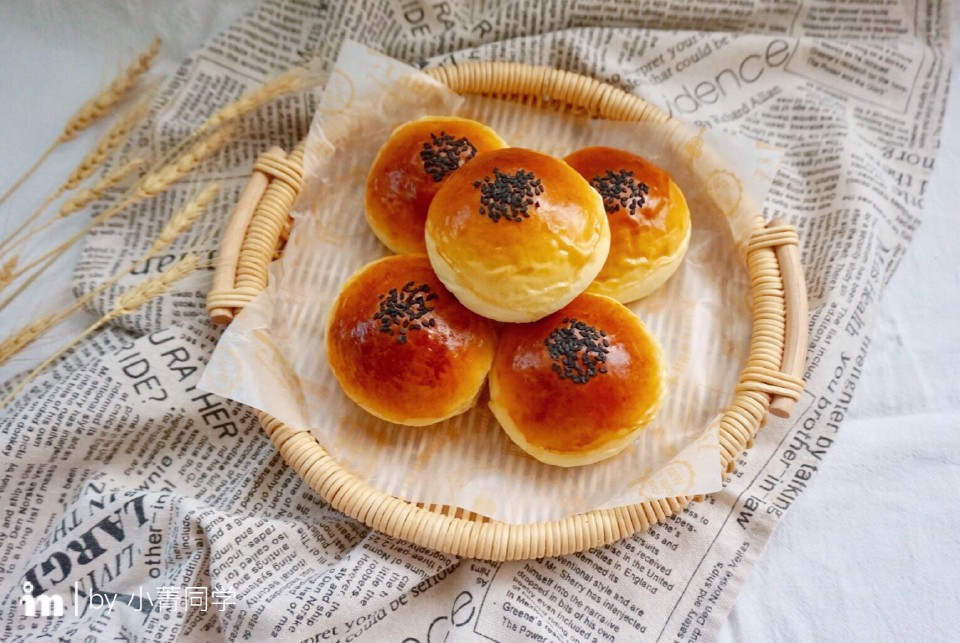
I’ve made these buns three times this fall—once with store-bought red bean paste, twice with my own simmered adzuki beans and a spoonful of dark brown sugar. My kids call them “pillow buns” because the dough stays soft even the next day. The trick I learned? Don’t skip the 15-minute bench rest after dividing the dough—it makes wrapping the filling so much easier, and you won’t get cracks on top. I bake them instead of steaming because my oven’s more reliable than my bamboo steamer (which always leaks). They come out golden, slightly glossy from the egg wash, with just enough sweetness to feel like a treat—not dessert overload.

Ingredients
-
200 g bread flour
high-protein, like King Arthur
-
50 g all-purpose flour
-
270 g smooth red bean paste
store-bought or homemade; divide into 9 × 30 g balls
Can’t find it? Try this one. -
3 g instant yeast
about ¾ tsp
-
30 g light brown sugar
or coconut sugar; reduces refined sugar
-
3 g fine sea salt
½ tsp
-
10 g milk powder
optional but adds tenderness; omit if unavailable
-
130 g lukewarm water
about 35°C / 95°F
-
25 g unsalted butter
softened at room temperature
-
1 large egg
beaten lightly (for egg wash)
-
1 tsp black sesame seeds
about 4 g, for topping

Instructions
-
Step 1: Mix dry and wet ingredients without activating yeast too early
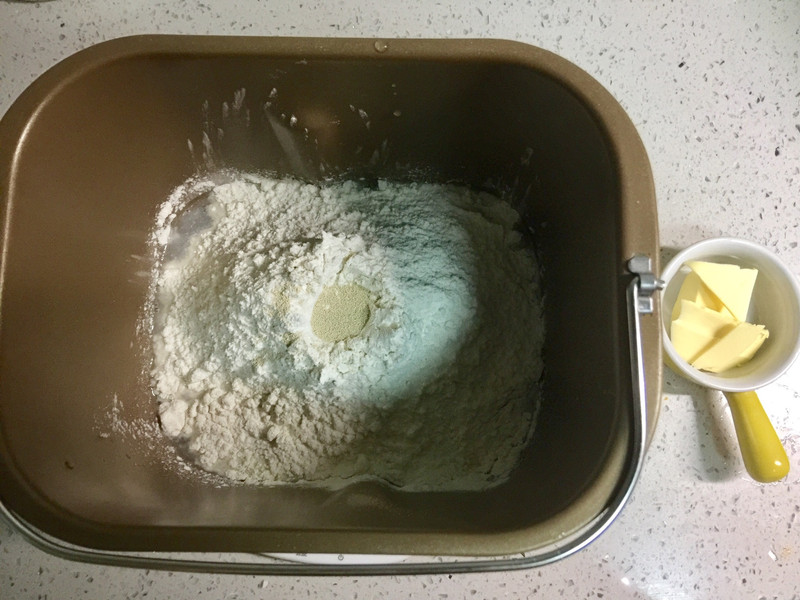
Prepare a bread machine bucket (or large bowl for hand kneading). First, pour in 130g room-temperature water. Place 40g granulated sugar and 3g salt in opposite corners of the bucket (to avoid salt directly contacting yeast, which affects its activity). Then add 200g bread flour, 50g cake flour, and 10g milk powder, covering the water completely with flour. Make a small indentation in the top of the flour with your finger, add 3g instant dry yeast, and lightly cover with a little flour (preventing yeast from activating early by direct contact with liquid).
-
Step 2: Run the dough cycle—but stop before fermentation
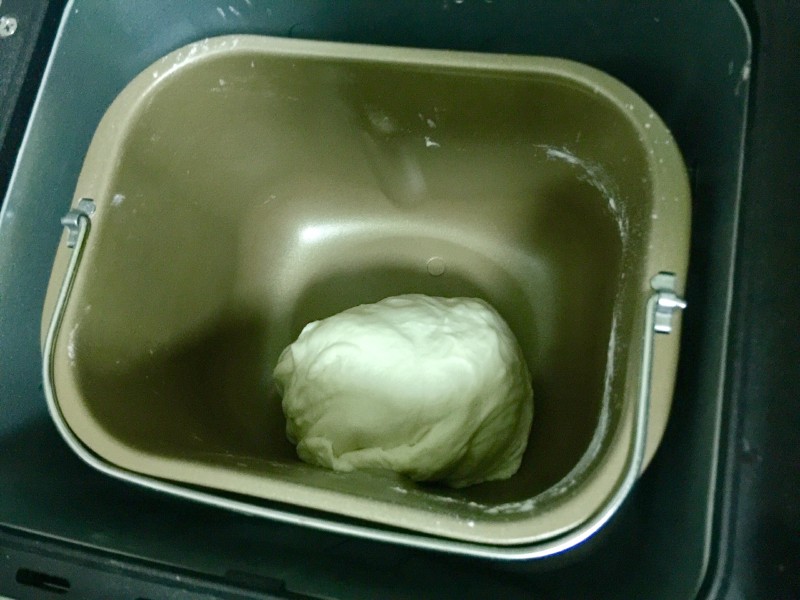
Lock the bread bucket into the bread machine, start the "Knead" or "iMix" program, and knead for 7-8 minutes until the dough is smooth and forms a preliminary ball. Turn off the program and let the dough rest for 5 minutes (relaxes gluten, making it easier to knead with butter later).
-
Step 3: Add Butter and Knead to Gluten Membrane
Cut 25g softened butter into small pieces and add to the rested dough. Start the bread machine’s kneading program again, kneading for another 10-12 minutes until the dough reaches the "extension stage" (take a small piece of dough, stretch it by hand—it should form a semi-transparent, unbreakable membrane; if it breaks, the edge should be jagged).
-
Step 4: First rise in the bread machine bucket (optional but convenient)
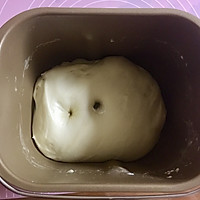
Leave the dough in the bread pan. Cover the opening loosely with a clean kitchen towel or plastic wrap (don’t seal tightly—yeast needs airflow). Let rise in a warm spot (26–28°C / 80°F) for 60–75 minutes, until 2.5 times its original size. A floured finger poke should leave a slow-retracting dent.
-
Step 5: Divide, rest, and fill while dough relaxes
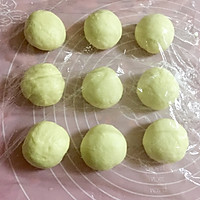
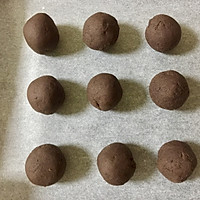
Take the fermented dough out onto a work surface, gently press with the palm to release air (expel large internal bubbles). Divide the dough evenly into 9 portions, about 50g each. Roll each portion into a smooth small ball, cover with plastic wrap and rest for 15 minutes (prevents the dough from being tight, making it easier to roll out later). At the same time, divide 270g red bean paste into 9 portions, 30g each, and roll into small balls (if the paste is too soft, refrigerate for 10 minutes to set).
-
Step 6: Shape with thick center and tight seam
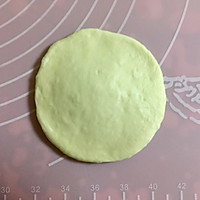
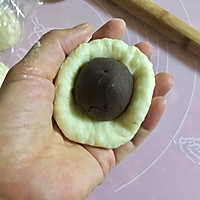
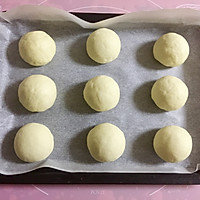
Take one rested dough ball, roll it into a circular sheet with a thicker center and thinner edges (dust the work surface with a little flour to prevent sticking). Flip the sheet (smooth side down for easier sealing), place one red bean paste ball in the center. Gather the edges of the sheet upward with your fingers and pinch the seam tightly (ensure no gaps to prevent filling leakage while baking). Place the bun on a baking tray lined with parchment paper, seam side down, and gently press the top to flatten it slightly.
-
Step 7: Second rise in a turned-off oven with steam
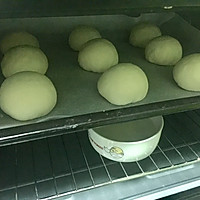
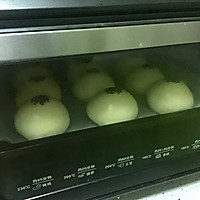
Arrange all filled buns evenly on the baking tray (leave 3-4cm between each bun to avoid sticking when expanding during baking). Place the tray in the oven, and put a bowl of hot water (about 40℃, to create a warm, humid environment—avoid scalding the dough) on the bottom of the oven. Close the oven door for secondary fermentation. Ferment for about 40 minutes until the buns double in size; gently press the surface with a finger—if it springs back slowly and feels elastic, fermentation is complete.
-
Step 8: Bake until golden with a light egg wash
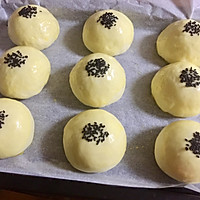
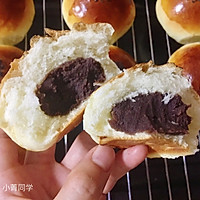
Preheat the oven to 180℃ (350℉) in advance. Remove the baking tray and hot water from the oven. Brush a thin, even layer of egg liquid on the surface of each bun (for a golden color). Dip one end of a clean rolling pin in a little water, then dip in an appropriate amount of black sesame seeds, and gently press the seeds onto the center of each bun (or sprinkle with sesame seeds directly). Place the tray on the middle rack of the oven, bake with upper and lower heat for 15 minutes (monitor in the last 3 minutes—if the surface is too dark, cover with aluminum foil to prevent burning). Immediately remove the tray after baking, transfer the buns to a cooling rack, and cool to room temperature before serving.

Chef’s Notes
-
Key to dough kneading: Butter must be softened to room temperature in advance (a finger can easily press a dent)—hard butter affects membrane formation. If kneading by hand, combine
-
Fermentation environment control: Primary fermentation temperature is recommended at 28-30℃, secondary fermentation at 32-35℃, humidity around 75%. If the oven has no proofing setting, place the dough in a microwave with a cup of hot water, close the door (no heating), and use the steam to create a suitable environment.
-
Flavor adjustment suggestions: Replace red bean paste with blueberry, strawberry, chocolate, or nut filling for different tastes. For richer milk aroma, replace water with pure milk (or add 5g condensed milk). For sesame allergies, substitute almond flakes, pumpkin seeds, or shredded coconut for decoration. To add texture, add 10g chopped cranberries to the dough (add at the end of kneading).